



Products
‹
›
‹
›
Focusing on "adapting to the rumen digestive mechanism of ruminants, preserving crude fiber nutrients, and improving feed conversion efficiency," dedicated equipment and processes transform raw materials such as corn, straw, silage, soybean meal, minerals, and probiotics into pelleted, block, or silage-based mixed feeds tailored to the needs of cattle and sheep at different growth stages (calf, fattening cattle, lactating cows, and mutton sheep). This approach improves feed utilization by 10%-15% and reduces the incidence of digestive system disorders such as rumen bloating and acidosis.
II. Core Process Flow
(I) Raw Material Pretreatment
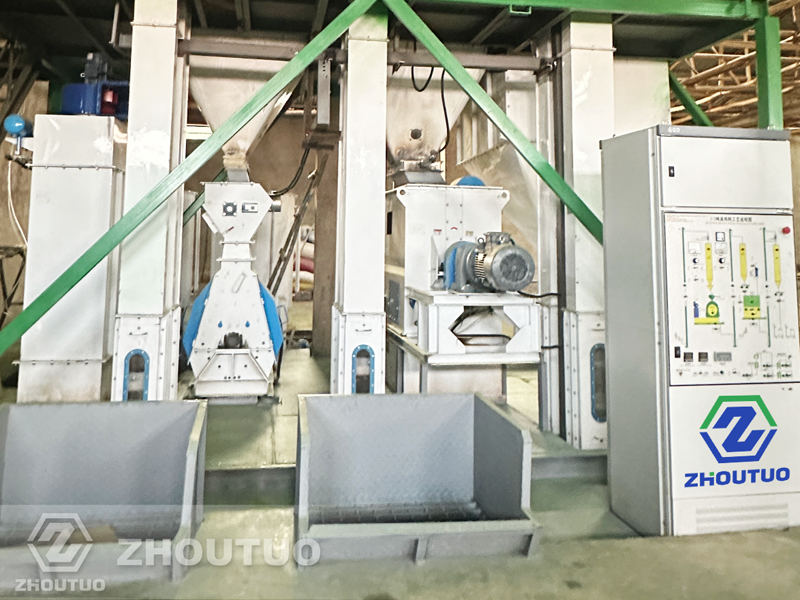
Cleaning Equipment: In addition to conventional vibrating screens to remove stones and weeds from straw and silage, and permanent magnets to absorb metal impurities, a drum washer is installed to rinse dirt and rotten parts from the silage surface. A wind-powered sorter is also installed to separate light impurities from the straw to ensure raw material cleanliness.
Crushing and Kneading Equipment: Straw is processed into 3-5cm segments using a kneading machine, retaining some fiber structure to stimulate rumen peristalsis. Claw mills are used to grind concentrates such as soybean meal and corn into 1-3mm coarse particles to prevent excessively fine materials from disrupting rumen fermentation. Silage is chopped into 1-2cm segments by a chopper to facilitate subsequent mixing.
Conditioning Equipment: Low-temperature conditioning is used, with saturated steam at 85-95°C introduced to control the raw material moisture content to 14%-16%, preventing high temperatures from damaging crude fiber and probiotic activity. At the same time, probiotic premix is added during the conditioning process, and uniform mixing is achieved through a stirring device to improve the rumen degradation rate of feed.
(II) Mixing and Pressing Stage
Mixing Equipment: A ribbon mixer, suitable for both coarse-grained and segmented feed, is used to mix concentrate, coarse feed, minerals (such as calcium and phosphorus additives), and probiotics according to the formulated ratio. The coefficient of variation for mixing uniformity should be ≤6%, ensuring nutritional consistency within each batch and preventing stratification.
Pressing Equipment: Depending on the needs, a flat-die pelletizer or briquette press should be selected. The flat-die pelletizer can produce 5-10mm pellets, suitable for calves and sheep. The briquette press can produce 3×5cm blocks, reducing crude fiber loss during transportation. The block shape is more consistent with the chewing habits of cattle and sheep, improving palatability. The finished product formation rate should be ≥90%.
(III) Finished Product Processing Stage
PRODUCT
Online Consultation
In order to provide you the suitable machine , pls offer below message for us
》What kind of feed would you like produce?
》What’s the production capacity?
》Do you have special process requirements, if yes, pls list.
Related Products

First class quality service and professional after-sales team.
In order to provide you the suitable solution , pls offer below message for us
》1. What kind of feed would you like produce? poultry? livestock? fish?
》2. What's the production capacity per hour?
》3. Where is the project location?
》4. What's the power? 380V 50HZ?
》5. If you have special requirements, pls list in advance.
Get in Touch
*We respect your confidentiality and all information are protected.